Sport
Why Active Skin Needs Different Care
5 min readRead →
Neem (Azadirachta indica) occupies a unique position in the Ayurvedic pharmacopoeia. Known in Sanskrit as 'sarva roga nivarini' — the universal healer of all ailments — neem has been used in Indian traditional medicine for skin conditions, immune support, and antimicrobial protection since at least 2000 BCE. Archaeological evidence from the Indus Valley civilisation suggests neem was in active use even earlier, embedded in a culture of preventive botanical medicine that predates most known medical traditions.
The antibacterial activity of neem is now comprehensively documented in peer-reviewed literature. The primary active compounds — nimbidin, nimbidol, nimbolide, and gedunin — work through multiple mechanisms simultaneously. They disrupt bacterial cell membrane integrity, inhibit bacterial enzyme activity, and block the adhesion proteins that allow pathogens to bind to skin tissue. This multi-pathway action is why bacteria have a significantly harder time developing resistance to neem than they do to single-compound synthetic antibiotics.
For active skin, the relevance is direct. Sweat itself is sterile — it is the interaction between sweat and the skin microbiome that creates the conditions for bacterial overgrowth. Staphylococcus aureus and Cutibacterium acnes (formerly Propionibacterium acnes) are the two species most commonly associated with post-workout breakouts and folliculitis. Clinical studies have confirmed neem's efficacy against both. One 2021 study found neem leaf extract inhibited S. aureus biofilm formation by over 80% at concentrations achievable in topical formulations.
Beyond antibacterial action, neem is strongly anti-inflammatory. Nimbolide in particular has been shown to inhibit NFkB, a central regulatory protein in the inflammatory cascade. For athletes dealing with heat rash, folliculitis, or friction-induced dermatitis, this mechanism provides targeted relief without the side effects associated with prolonged corticosteroid use.
From an Ayurvedic constitutional perspective, neem is classified as tikta (bitter) and cooling in nature, making it particularly suited for Pitta-type skin — which tends to be reactive, heat-prone, and inflammation-susceptible. Coincidentally, this profile maps almost exactly onto the physiological state of skin under sustained athletic stress.
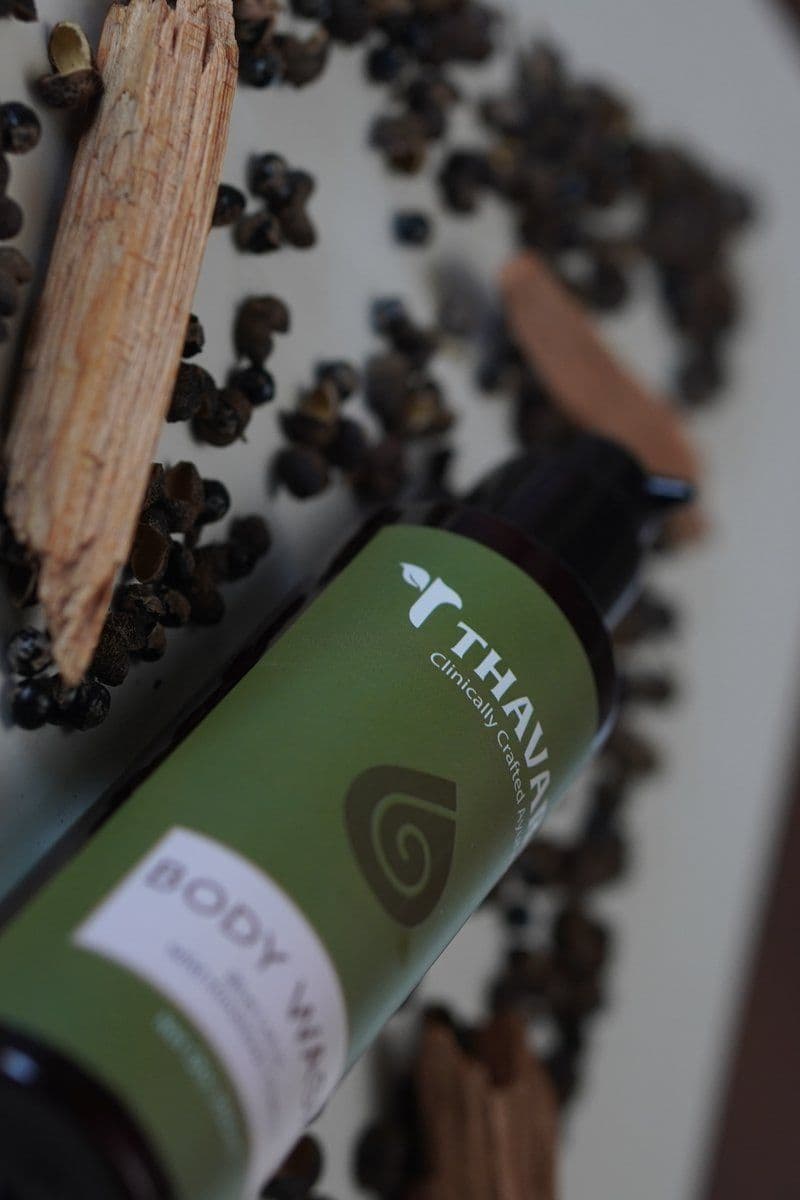
At Thavare, neem is used in cleansing formulations because the post-workout cleansing step is where its properties are most precisely needed — immediately after sweat exposure, on warm, open-pored skin, at the peak of microbial vulnerability.